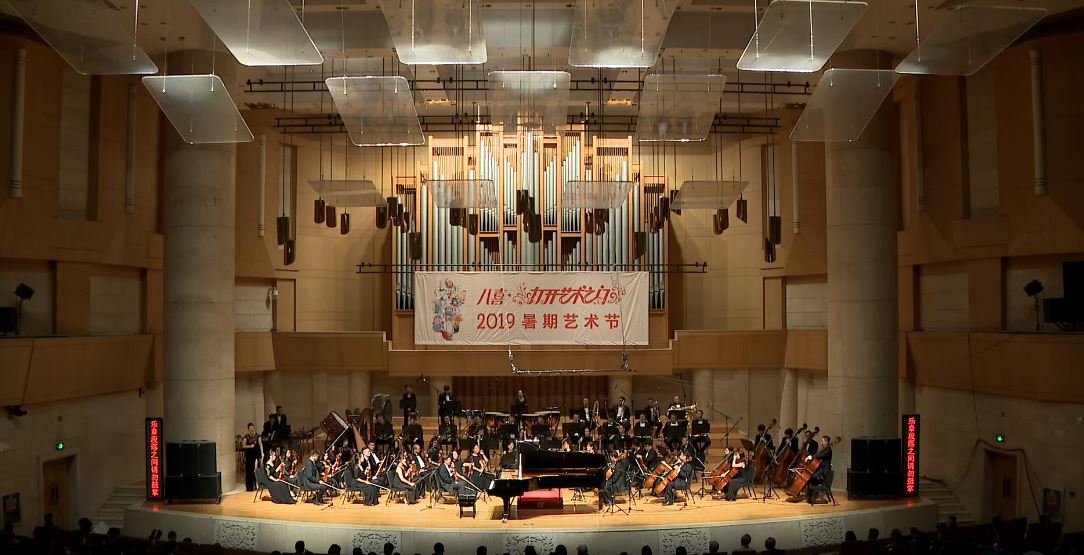
Composed in 2014 at the age of 17, Yuanfan Yang’s first piano concerto is based on a famous drama The Wilderness by the late world-renowned playwright Cao Yu. It consists of three movements: The first movement (04:01), ‘Vengeful Return’, presents the protagonist Chouhu’s sneaking back with hatred to his hometown
Composed in 2014 at the age of 17, Yuanfan Yang’s first piano concerto is based on a famous drama The Wilderness by the late world-renowned playwright Cao Yu. It consists of three movements: The first movement (04:01), ‘Vengeful Return’, presents the protagonist Chouhu’s sneaking back with hatred to his hometown by train after escaping from prison. He encounters other main characters. The scenery of the country village is striking in the autumn. Showing personified melodic features in characterisation, the music has dual character of realism and symbolism. <br>The second movement (14:30), ‘Rekindled Love Flame’, shows the love of the hero and heroine from their reunion. The music represents their sentimental memories, joyfulness of reunion, intertwined love and hatred, grievance towards the reality, and aspiration for the future. The movement has adopted the romantic style of music, soothing and lyrical. The third movement (23:10), ‘Revenge and Escape’, presents the complex mental state and feelings shown by the hero and heroine. After killing the heroine’s husband Daxing, the hero Chouhu is full of fear and hallucinations. The two principal characters flee into the forest. With varieties of musical features, this movement accentuates the two principal characters’ panic, frustration, sadness, nervousness, especially the hero’s despair and death. Train sound symbolises the heroine’s possible success in making getaway. The ending is thus intended to create transitory brightness and high-spirits, so as to bless her to reach the gold-paved place that she longed for with the hero. Improvised encore is on a theme given by the audience (34:06). In 2017 this concerto won the China National Arts Fund, and with its support, the work was performed for two tours in China in 2018-2019. This video is a live performance in the Beijing Forbidden City Concert Hall held on 24th August 2019.
The Peony Pavilion
Tang Xianzu, known as Shakespeare of China, lived in the same era as William Shakespeare (they both died in 1616), and was one of the greatest playwrights in the history of Chinese drama. Yuanfan Yang's piano concerto is based on the ‘Garden Dreams’ acts of Tang Xianzu’s best-known drama The
Tang Xianzu, known as Shakespeare of China, lived in the same era as William Shakespeare (they both died in 1616), and was one of the greatest playwrights in the history of Chinese drama. Yuanfan Yang's piano concerto is based on the ‘Garden Dreams’ acts of Tang Xianzu’s best-known drama The Peony Pavilion. It consists of three movements: Mov. 1 (01:25) is The Spring Garden. In the splendid garden behind Du’s mansion, there are bridges, corridors, trees, plants, pavilions, flowers, bees flying, butterflies dancing, water flowing and birds singing. Strolling in the garden, the heroine Du Liniang and her maid Chunxiang admire the beautiful scenery and feel pleasant. Mov. 2 (07:26) is Lament of Self-Pity. Deep in the garden, the sight strikes a chord in Du Linian’s heart, making her more aware of love and lust. However, her love and lust have been repressed and frustrated in the social culture and customs. She feels confused, gloomy, aggrieved and helpless. Mov. 3 (16:57) is Love Dreams. Feeling tired, Du Liniang falls asleep and goes off to dreamland, in which the hero Liu Mengmei appears. The young couple fall in love with each other at the first sight. After waking up, the heroine falls into a lovesickness, being full of nostalgia for the hero, and yearns for freedom and happiness. This work was commissioned by the government of Fuzhou, the hometown of Tang Xianzu, and supported by the UK Beijing Arts Centre. This live video is the world premiere performance of this work, performed by Yuanfan Yang with the Hornton Symphony Orchestra, and conducted by Jack Wong at the Greenwood Theatre London UK on 21st September 2019.
Blossoms on the Moonlit Spring River
Piano Concerto No 3 in Five
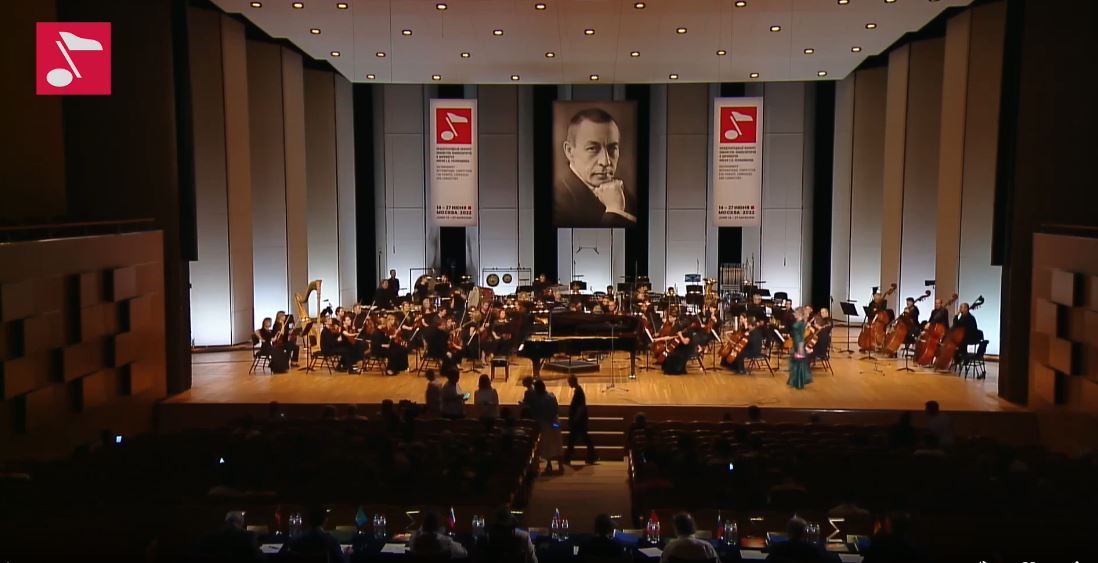
Yuanfan Yang (pianist & composer) performs his complete Piano Concerto No. 3 in Five Movements (2021) with the Novaya Rossiya State Symphony Orchestra, conducted by Fyodor Lednev, during the finals of the Rachmaninoff International Music Competition for Piano, Conducting and Composition, held at the Rachmaninov Concert Hall (Philharmonia-2) on 26
Yuanfan Yang (pianist & composer) performs his complete Piano Concerto No. 3 in Five Movements (2021) with the Novaya Rossiya State Symphony Orchestra, conducted by Fyodor Lednev, during the finals of the Rachmaninoff International Music Competition for Piano, Conducting and Composition, held at the Rachmaninov Concert Hall (Philharmonia-2) on 26 June 2022 at 19:00. Yuanfan was awarded 1st Prize & Gold Medal in the Composition Category. Yuanfan writes: I started writing this concerto in May 2020 as a project for the lockdown period during the pandemic and completed it a year later in May 2021. I had already written two officially numbered piano concertos in my life; the first one was written when I was 17, and the second when I was 22, the latter of which was written in a specific harmonic language to fulfil a requested criterion that it had to be particularly audience friendly.But the third was conceived from a fit of inspiration, where I could be free to compose how I wanted. With relation to styles and features, the lockdown period allowed me to discover and get inspired by a great variety of music; I had over the past few years started to wonder how I was going to develop my ‘style’ in a way I wanted. I intended to write a piano concerto for the 21st century – with the aim of retaining the virtuoso concerto elements from the romantic era but blending them with more contemporary usages of harmony and structure, and hopefully through writing two previous concertos, I had built up some experience for this. I also explored taking consonant chords/harmonies/tonalities but used, combined and built upon them in an unusual personal way, which hopefully gives the concerto a sense of accessibility and stability, as I was not so interested in writing something fully atonal or experimental. This concerto spans five contrasting movements, in a slow, fast, fast, fast, slow structure. I felt five movements would provide ample opportunity to showcase the contrasts of mood and temperament. Each movement feels like a different piece, and yet hopefully all five movements tie up the concerto together cohesively, and not just because each movement starts on the note ‘G’! Each movement’s melodic and harmonic material is unique to themselves, except the first and final movements which share the same melodic material.The first movement 02:41 serves mainly as a scene-setter and introduces the audience to the concerto in a gradual way, starting from somewhere distant and building to a kind of climax, before fading again. The second movement 08:10 is somewhat like a disfigured scherzo + trio, although it feels much more substantial than that. The mood is often unsettling, intimidating, biting and forboding, contrasting the trio section, which starts off calmer before becoming more and more recitative-like, before the mood of the scherzo returns, even more fiery, tempestuous and relentless than the first time round. The third movement 14:50 starts quite rhapsodically, before suddenly moving into a fanfare-like section doubled on piano and horns; all of which surrounds a dream-like meditative section, built upon the piano’s expressive and melodic use of repeated notes. The fourth movement 20:02 is a moto perpetuo; a relentless non-stop toccata from start to finish, initially starting with the wind before getting interrupted and taken over by the piano which continues the rollercoaster ride determinedly onwards, eventually arriving at a huge climax near the end, before fading cheekily. The fifth and final movement 25:09 is almost like a chorale and feels like a culmination of the eventualities from previous movements – it is grand, luminous in stature, and moves slowly, solemnly with nobility and pride. This movement is closest out of all to feeling like a ‘soundscape’ and takes its time to build to these gigantic all-encompassing climaxes, so much so that as the movement progresses, the piano is eventually engulfed and consumed by the orchestra (who may be ‘jealous’ that the piano has been at the centre of the piece for so long). It is ironic that by the very end, the piano gets softer whilst the orchestra gets louder, and the piano ends up being completely engulfed by the orchestra.
Piano Concerto No. 3: Selected Movements + Interview from Closing Gala
Yuanfan Yang (1997-): Piano Concerto No. 3 in Five Movements (2021): 1st, 4th & 5th Movements from the Gala Concert Closing Ceremony & Interview04:32 1st movement09:51 4th movement14:58 5th movement23:34 Interview with Alexander Tchaikovsky, Composer and Chairman of the Jury25:25 Interview with Yuanfan Yang on his workYuanfan Yang (pianist &
Yuanfan Yang (1997-): Piano Concerto No. 3 in Five Movements (2021): 1st, 4th & 5th Movements from the Gala Concert Closing Ceremony & Interview04:32 1st movement09:51 4th movement14:58 5th movement23:34 Interview with Alexander Tchaikovsky, Composer and Chairman of the Jury25:25 Interview with Yuanfan Yang on his workYuanfan Yang (pianist & composer) performs the 1st, 4th and 5th movements from his Piano Concerto No. 3 in Five Movements (2021) with the Novaya Rossiya State Symphony Orchestra at the Closing Gala of the Rachmaninoff International Music Competition for Piano, Conducting and Composition, held at the Great Hall of the Moscow Conservatory on 27 June 2022 at 19:00. Yuanfan was awarded 1st Prize & Gold Medal in the Composition Category. Yuanfan writes: This concerto was started in May 2020 as a project for the lockdown period during the pandemic and was completed in May 2021. I had already written two officially numbered piano concertos in my life; the first one was written when I was 17, and the second when I was 22, the latter of which was written in a specific harmonic language to fulfil a requested criterion that it had to be particularly audience friendly.But the third was conceived from a fit of inspiration, where I could be free to compose how I wanted. With relation to styles and features, the lockdown period allowed me to discover and get inspired by a great variety of music; I had over the past few years started to wonder how I was going to develop my ‘style’ in a way I wanted. I intended to write a piano concerto for the 21st century – with the aim of retaining the virtuoso concerto elements from the romantic era but blending them with more contemporary usages of harmony and structure, and hopefully through writing two previous concertos, I had built up some experience for this. I also explored taking consonant chords/harmonies/tonalities but used, combined and built upon them in an unusual personal way, which hopefully gives the concerto a sense of accessibility and stability, as I was not so interested in writing something fully atonal or experimental. This concerto spans five contrasting movements, in a slow, fast, fast, fast, slow structure. I felt five movements would provide ample opportunity to showcase the contrasts of mood and temperament. Each movement feels like a different piece, and yet hopefully all five movements tie up the concerto together cohesively, and not just because each movement starts on the note ‘G’! Each movement’s melodic and harmonic material is unique to themselves, except the first and final movements which share the same melodic material.The first movement serves mainly as a scene-setter and introduces the audience to the concerto in a gradual way, starting from somewhere distant and building to a kind of climax, before fading again. The second movement is somewhat like a disfigured scherzo + trio, although it feels much more substantial than that. The mood is often unsettling, intimidating, biting and forboding, contrasting the trio section, which starts off calmer before becoming more and more recitative-like, before the mood of the scherzo returns, even more fiery, tempestuous and relentless than the first time round. The third movement starts quite rhapsodically, before suddenly moving into a fanfare-like section doubled on piano and horns; all of which surrounds a dream-like meditative section, built upon the piano’s expressive and melodic use of repeated notes. The fourth movement is a moto perpetuo; a relentless non-stop toccata from start to finish, initially starting with the wind before getting interrupted and taken over by the piano which continues the rollercoaster ride determinedly onwards, eventually arriving at a huge climax near the end, before fading cheekily. The fifth and final movement is almost like a chorale and feels like a culmination of the eventualities from previous movements – it is grand, luminous in stature, and moves slowly, solemnly with nobility and pride. This movement is closest out of all to feeling like a ‘soundscape’ and takes its time to build to these gigantic all-encompassing climaxes, so much so that as the movement progresses, the piano is eventually engulfed and consumed by the orchestra (who may be ‘jealous’ that the piano has been at the centre of the piece for so long). It is ironic that by the very end, the piano gets softer whilst the orchestra gets louder, and the piano ends up being completely absorbed by the orchestra.
Twilight for Tenor and Piano, Poem by Misak Metsarents
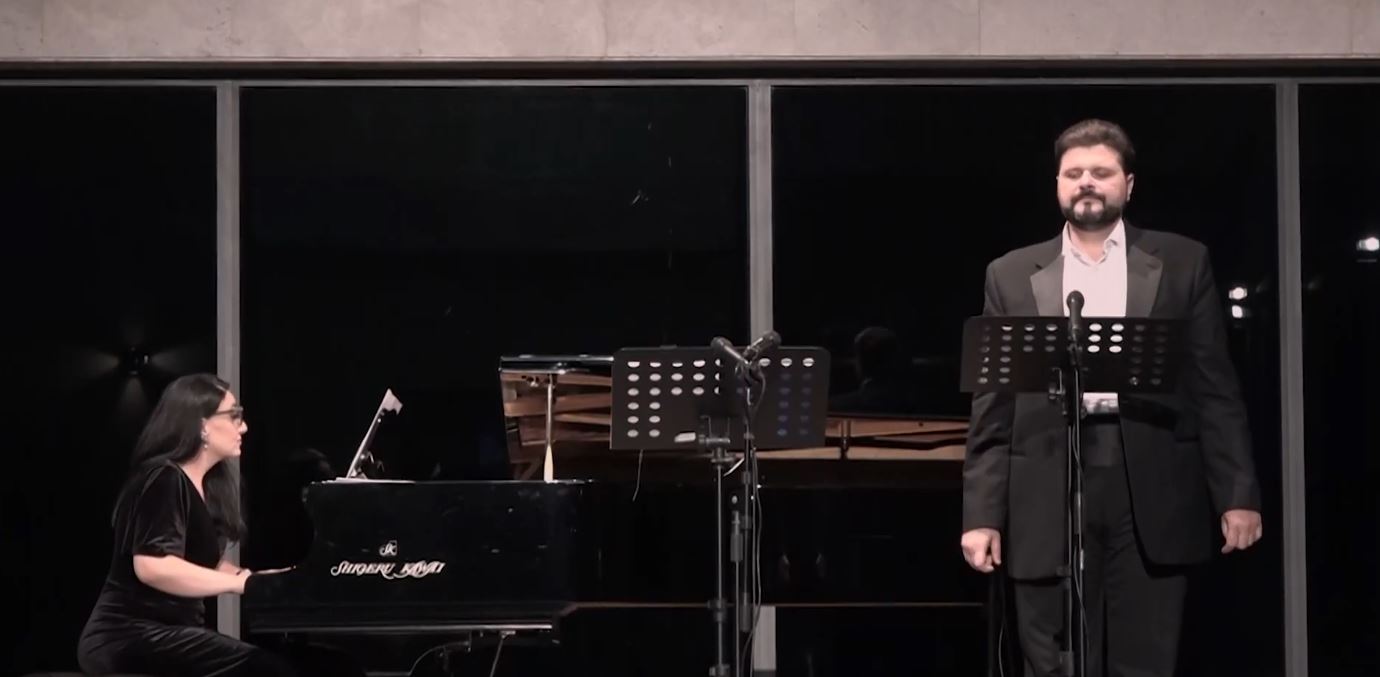
Yuanfan Yang – Twilight for Tenor and Piano (2024) Poem by Misak Metsarents (1907) Written for Arpine Kalinina Berj Karazian – Tenor Anahit Dilbaryan – Piano Like a girl in saffron walking Under pine trees toward the flowering pomegranate grove the dusk passes. And twilight falls like a sweet-smelling iris
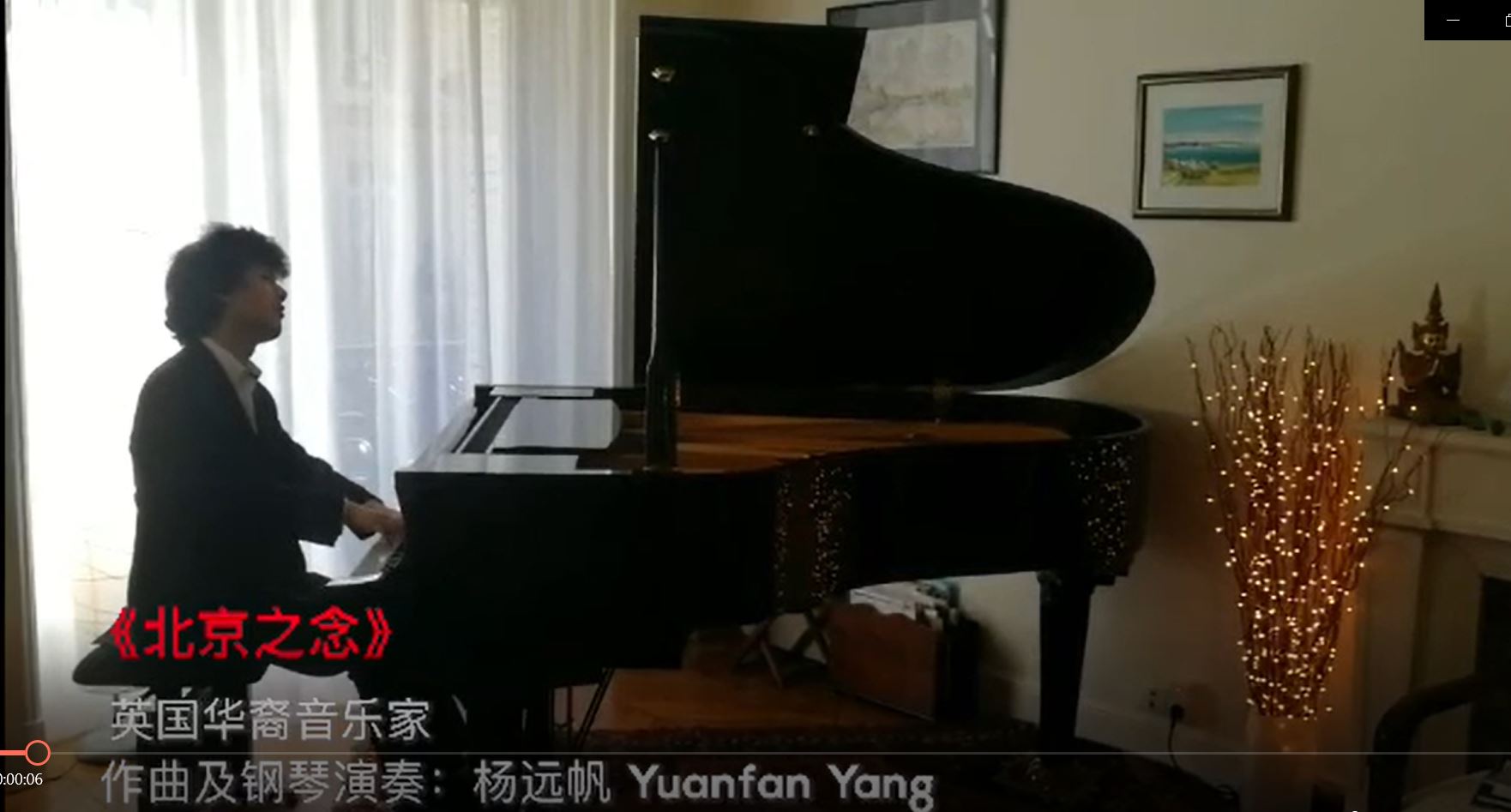
Yuanfan Yang – Twilight for Tenor and Piano (2024)
Poem by Misak Metsarents (1907)
Written for Arpine Kalinina Berj Karazian – Tenor Anahit Dilbaryan – Piano Like a girl in saffron walking
Under pine trees toward the flowering
pomegranate grove the dusk passes. And twilight falls like a sweet-smelling iris of many shades of blue wilting, dying, folding itself over a thin yellow stamen of hope. Then it is dark. My soul has long been in the dark
where evening waited paste light of dreams. In the bright false day of the moon I can count the dreams that pushed despair off my shoulders. But the dreams are orphaned and gone now. And it is starting to rain in my soul.
The girl in saffron has gone. My hand is empty. The piece was written especially for the British and Armenian Musical Bridge project in 2024. British and Armenian Musical Bridge – 10th Anniversary Concert
Komitas Museum-Institute, July 19, 2025
Project Initiator & Organiser: Arpine Kalinina